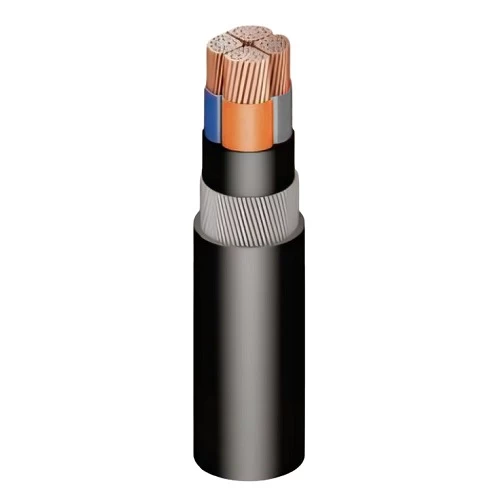
Stranded Copper SWA Armored Cable 3×50+25 mm2, 600/1000V, XLPE Insulated | Riyadh Cables
(1644 Product Views)

Buy with Youmats stranded copper electrical cable (CU/XLPE/SWA/PVC) 3 phase + neutral line, cross-sectional area 3×50+25 mm2, insulation color (blue, brown, black, gray), produced by Riyadh Cables Company, it is jacketed with a high-quality PVC (polyvinyl chloride) outer sheath that provides additional protection against corrosion, heat and moisture damage.
Product description
Stranded copper electrical cable (CU/XLPE/SWA/PVC) 3 phase + neutral line, Produced by Riyadh Cables Company, Armored with layer of steel wires (SWA) to give it mechanical strength to protect it from external pressures that fall on the cable. Insulated with XLPE (cross-linked polyethylene) which provides a unique combination of strength, flexibility and reliability making them suitable for a diverse range of applications. It can withstand high temperatures up to 90°C for extended periods without compromising performance. The cable also withstands harsh environmental conditions, including moisture, corrosion and chemicals, making it ideal for outdoor use. Chloride-free, making it environmentally friendly. It is also jacketed with a high-quality PVC (polyvinyl chloride) outer sheath that provides additional protection against corrosion, heat and moisture damage. XLPE cable is commonly used extensively in power transmission and distribution systems in homes, buildings, offices and industrial applications where there is a risk of mechanical damage. Available in different shapes, sizes and conductor ratings to meet diverse application requirements.
- Insulation Material: XLPE (Cross-Linked Polyethylene)
- Outer Sheath: PVC
- Voltage: 600/1000 volts
- Phase Conductor Shape: Sectoral Stranded (sm)
- Neutral Conductor Shape: Round Stranded (rm)
- Number of Cores: 3 Core + Neutral Line
- Conductor Size (Cross-Sectional Area): ( 3c × 50 mm2 ) +25 mm2
- Number of Phase Wires: 6
- Number of Neutral Wires: 7
- Approx Diameter of Neutral Conductor: 6.3 mm
- Nominal Insulation Thickness of Phase: 2 mm
- Nominal Insulation Thickness of Neutral: 0.9 mm
- Armoring: SWA (Steel Wire Armor)
- Nominal Steel Wire Diameter: 1.6 mm
- Nominal Sheath Thickness: 1.9 mm
- Approx Overall Diameter: 32 mm
- Weight: 2775kg/km
- Cable Length: 500 meters
- Phase Core Colors: (Blue, Brown, Black, Gray)
- Standard: IEC 60502-1
Additional Information▼
When to Choose SWA Armored Cables?
Typically, SWA Armored Cables are selected when there is a likelihood of the cable being subjected to abrasion, pressure, or impacts during installation or operation (such as installation in outdoor pathways or areas where mechanical impact may occur). The steel wire armor (SWA) provides additional mechanical protection to the cable compared to unarmored cables, helping to reduce the risk of damage during service.
Quick Summary of the Displayed SWA Cable Specifications
- Manufacturer: Riyadh Cables
- Type: Copper Stranded Cable CU/XLPE/SWA/PVC (Low Voltage)
- Number of Cores: 3.5 Core (3 Cores + Neutral)
- Size: 50 mm² (3×50 + 25 mm²)
- Voltage: 600/1000 Volts
- Insulation/Sheath: XLPE Insulation / PVC Sheath
- Conductor Shape: Stranded Section (sm)
- Insulation Colors: Blue, Brown, Black, Grey
- Length: 500 meters
Important Guidelines Before Purchase (To Determine the Right Size)
To correctly select SWA Armored Cables for your project in Saudi Arabia, ensure that the voltage (600/1000 Volts) matches your system, and determine the number of cores (3 Cores + Neutral) based on the nature of the supply. Then, choose the appropriate cross-sectional area (such as 50 mm²) according to the circuit load, length of the run, and installation method. If the installation is exposed to harsh conditions or frequent abrasion, an armored cable is a practical choice for additional protection.
Brief Installation Tips for SWA Cables
When installing SWA Armored Cables, be sure to use suitable accessories for armored cables (glands/special fittings for armored cables) to ensure a secure installation and protection at the entry point. Avoid pulling the cable forcefully or bending it sharply during installation, and maintain an organized installation path to reduce friction. It is also advisable to carry out cable terminations by a qualified electrician to ensure safety and connection quality.

-size_50_50.webp)
-size_50_50.webp)
-size_50_50.webp)

-size_50_50.webp)
-size_50_50.webp)
